























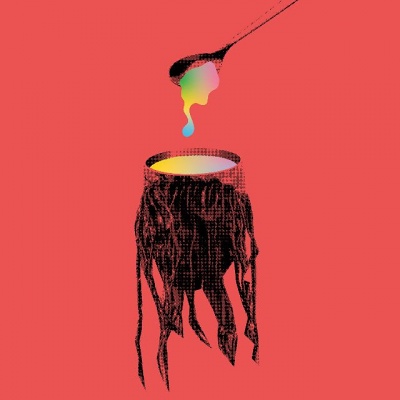



- New 2×LP (Coloured Vinyl) JIAOLONG034CLP£30.99'Pink & White' coloured vinyl.Out of stock Notify me when in stock
- LP JIAOLONG034LP£24.99Out of stock Notify me when in stock
- CD JIAOLONG034CD£9.99In stockAdd to Bag
- Daphni – Sad Piano House
- Daphni – Clap Your Hands
- Daphni – Hang
- Daphni – Lucky
- Daphni – Waiting So Long
- Daphni – Napoleon’s Rock
- Daphni – Goodnight Baby
- Daphni – Talk To Me
- Daphni – Two Maps
- Daphni – Josephine
- Daphni – Miles Smiles
- Daphni – Goldie
- Daphni – Caterpillar
- Daphni – Shifty
- Daphni – Invention
- Daphni – Eleven
Daphni’s fourth studio album 'Butterfly'.
At the start of this summer, following a three-year hiatus for Daphni (punctuated only by his first evercollaborative Daphni track ‘Unidos’ alongside Sofia Kourtesis), he dropped ‘Sad Piano House’. Thetrack represented something of a continuation in the Daphni catalogue, its roots growing fromCherry’s ‘Cloudy’ and its subsequent Kelbin remix, something in that song’s makeup having aprofound effect when played on dancefloors by Snaith and countless others. ‘Sad Piano House’deployed more intangibly irresistible bendy piano to equally satisfying effect and continues toachieve similarly rhapsodic dancefloor saturation.
Though a sizeable gap for Daphni releases, between Cherry and Butterfly however of course sitsHoney, the latest Caribou album and one that saw the more instantaneous and dancefloor leaningtraits of Daphni peaking through the cracks more than ever before. This blurring of the lines leads toan intriguing collaboration in Butterfly’s lead single ‘Waiting So Long (feat. Caribou)’. An unlikelyduo - in that both artists are the same man, Dan Snaith - ‘Waiting So Long’ is not so much an identitycrisis, ego trip, or the result of a chemical spill in the Snaith laboratory. It’s simply a track that Snaithfelt for the first time belongs to both aliases, and might appeal to fans of both. He has never sung ona Daphni track before, and did not set out with the intention to do so this time, and yet this strangebilling was born.
Daphni music has always been Snaith’s way of hitting directly to the core of the dancefloors he spends so much of his time playing to, and those dancefloors have been steadily expanding as his name grows, with the music following suit. This album however also draws from further back with a definite kinship to the very first Daphni album, the invigorating bag of ideas that was Jiaolong.
Butterfly is a showcase of the wonderful variety and surprising twists and turns that made that albumsuch an exciting new prospect and that still to this day make Snaith such an intriguing DJ. There aremore heavy hitters here, tracks that fill those dancefloors better than anyone, like ‘Clap Your Hands’which picks up the energy of ‘Sad Piano House’ and flips it, exposing the gritty and intoxicatingunderbelly of Snaith’s hitmaking side, while retaining the playful urgency that runs through all of hiswork of late. Meanwhile ‘Hang’’s comic-strip horns are unpinned by gleeful force, unrelenting andthrillingly unshakeable. Elsewhere though comes a clutch of other tunes that might creep outsomewhere more off the beaten path, a path Snaith has never stopped seeking in amongst his largerbillings. ‘Lucky’ is squirmy and elusively intoxicating, ‘Invention’ skitters down meandering, invitingcorridors, ‘Talk To Me’ grumbles and broods in the murk, and ‘Miles Smiles’ could roll on endlessly,so confident in its groove. There are no obvious peaks in these tracks or unifying moments, in factmany of them really have no business being on the dancefloor at all, and yet in the right setting, theycould be the most fun to be had all night.
One such club is a good microcosm for the ethos of Butterfly as a whole. “Around the time I wasfinishing up this album I played a long set in a club called Open Ground in Wuppertal, Germany.”Snaith recalls, “It’s kind of, in one sense, the platonic ideal of the kind of club I’d want to play in.Every single decision has been taken, at great expense, with the aim of making the perfect soundingmedium sized club room. But on top of it being the perfect acoustic environment it also is run by anamazing collection of people in a way that gives it a sense of community that dance music at its bestprovides. It is an absolute pleasure to play in that room to a crowd of people who come from all over.Playing in there you feel like you can play anything, and I played works in progress of pretty muchevery track on this album in my set there. Don’t get me wrong, I love playing a short set at a festivalor in a more raw warehouse kind of club where you bang it out and only really functional musicworks but on record I guess the point of these Daphni records is to keep in mind a more expansiveidea of dance music where the parameters are broad and the church is broad. I think that actually,putting really functional stuff next to weirder tracks (both on an album and in a dj set) might be thething that’s still most interesting to me.”
This is the feeling that’s most palpable on Butterfly, and in every single time you see Snaith DJ. Rightfrom the inception of the Daphni alias - and even before that – the thrill of trying stuff out, pushing atthe boundaries has always been there and on Butterfly is present in all its twists and turns. It leapsall over the place and yet it hangs together, never feeling like a grab bag of dancefloor utilities butrather a distillation of all the strings to Snaith’s bow, exhilaratingly human and unified by onesingular concept – simple and joyful exploration.

- John Holt – You’ll Never Find Another Love Like Mine
- Cornell Campbell – Be Thankful
- Elizabeth Archer & The Equators – Feel Like Making Love
- The Chosen Few – People Make The World Go Round
- Dave & Ansel Collins – Single Barrel
- The Now Generation – Shaft
- The Marvels – Some Day We’ll Be Together
- The Darker Shades Of Black – War
- Winston Curtis – Private Number
- Lee Perry & The Upsetters – Bathroom Skank
- Slim Smith – Watch This Sound
- Winston Francis – Sitting In The Park
- The Sensations – If I Don’t Watch Out
- Carl Bert & The Cimarons – Slipping Into Darkness
- The Darker Shades Of Black – Ball Of Confusion
- Jah Youth – Ain’t No Sunshine
- 1. John Holt – You’ll Never Find Another Love Like Mine
- 2. Cornell Campbell – Be Thankful
- 3. Elizabeth Archer & The Equators – Feel Like Making Love
- View full info and tracklisting
- 2xLP (+ Download Code) SJRLP597£28.00In stockAdd to Bag
- CD SJRCD597£12.00In stockAdd to Bag
- MP3 Release SJRD597£10.00In stockAdd to Bag
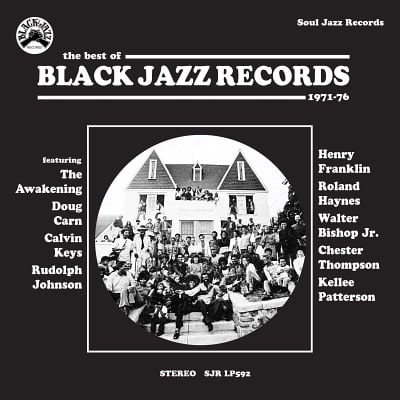
- The Awakening – Mode For D.D.
- Doug Carn – Higher Ground
- Calvin Keys – Aunt Lovey
- Roland Haynes – Eglise
- The Awakening – Slinky
- Walter Bishop Jr. – Coral Keys
- Rudolph Johnson – Diswa
- Henry Franklin – Blue Lights
- Kellee Patterson – Maiden Voyage
- Chester Thompson – Power House
- The Awakening – March On
- Walter Bishop Jr. – Soul Village
- Rudolph Johnson – The Highest Pleasure
- 1. The Awakening – Mode For D.D.
- 2. Doug Carn – Higher Ground
- 3. Calvin Keys – Aunt Lovey
- View full info and tracklisting
- 2xLP (+ Download Code) SJRLP592£28.00In stockAdd to Bag
- CD SJRCD592£12.00In stockAdd to Bag

- Doug Carn – Little B's Poem
- Doug Carn – Power and Glory
- Doug Carn – Revelation
- Doug Carn – Chant
- Doug Carn – Western Sunrise
- Doug Carn – The Messenger
- Doug Carn – Naima
- Doug Carn – Mighty Mighty
- Doug Carn – Higher Ground
- Doug Carn – Fatherhood
- Doug Carn – Trance Dance
- Doug Carn – Acknowledgement
- Doug Carn – Sweet Season
- Doug Carn – Jihad
- 1. Doug Carn – Little B's Poem
- 2. Doug Carn – Power and Glory
- 3. Doug Carn – Revelation
- View full info and tracklisting
- 2xLP + Download Code SJRLP593£28.00In stockAdd to Bag
- CD SJRCD593£12.00In stockAdd to Bag